


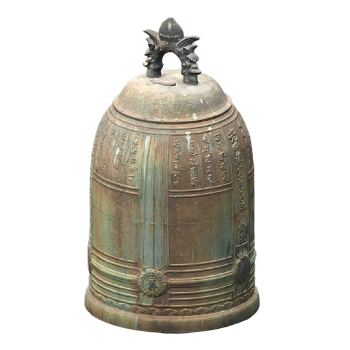
Ancient Bronze Van Bell (Buddhist Temple Bell)
This is a well-preserved ancient bronze Brahma bell (Buddhist temple bell) with important religious and historical value. The inscription on it is key information for studying the age and background of its casting. This large bronze bell with inscriptions of Buddhist scriptures is very common in East Asian Buddhist cultural circles such as China, Japan and South Korea.

Japanese Kagoshima Temple Bell
It is a temple in Japan and its own bell. Kanseiji is a Buddhist temple located in Kamakura City, Kanagawa Prefecture, Japan, built in the 13th century. It is a temple with a long history, which has both religious significance and is an important cultural heritage of Kamakura City. The Bonsyou is an ancient bronze bell in Kagoshima Temple and is considered one of the oldest bells in Kamakura City. It is an important cultural asset used for religious ceremonies and daily activities in temples. Usually tall and exquisite, with Buddhist cultural patterns and texts cast on it, possessing artistic and historical value.

The Bronze Bell "Niu Zhong" from the Eastern Zhou Dynasty in China
This bronze bell is a cultural relic from the Eastern Zhou Dynasty in China, made in the 5th century BC. The name of this clock is "Niu Zhong", which was discovered in Henan Province, China. This clock is housed in the British Museum. During the Eastern Zhou Dynasty, bronze bells were a very important part. Clocks did not have bell tongues and needed to be struck with wooden hammers to produce sound. This type of clock has excellent quality in music, such as clear sound, fast attenuation, clear and focused tones. The height of the clock is 38.3 centimeters and the width is 24.4 centimeters. There are three rows of snake shaped decorations on each side, further divided by trapezoidal panels with faint dragon patterns.

Korean Koryo period bronze clock "Buddhist temple bronze inscription ceremony clock"
This bronze ceremonial bell is a Korean artifact from the Koryo period (918-1392). Its name is "Buddhist temple bronze inscription ritual bell". The decoration of this bell is very fine, made of cast bronze with engraved inscriptions, the bell was made in the 1200 AD generation. Once used as part of a Buddhist indoor ritual, the bell hangs in a Buddhist temple with a cast dragon on top and a vertical tube to amplify the sound. The inscription indicates that it was cast in the Year of the Dragon, took three years to make, and is now in the collection of the Cleveland Museum of Art.
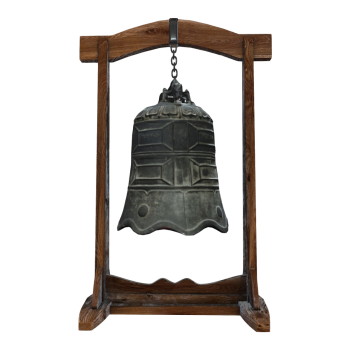
Chinese classical temple black walnut solid wood frame bronze clock large ornaments

The Zhou Dynasty bronze bell at the British Museum
The bronze bell of the Zhou Dynasty, circa 5th century BC, was unearthed in Henan, China and is now in the British Museum in London. The bronze bell was a relatively common percussion instrument in ancient China, appearing in the early Western Zhou Dynasty, and its form evolved from the crown. The basic form is a suspended handle on the plane of the upper part of the flat resonance box with sharp sides. From the shape of the bronze bell can be divided into two kinds, namely Yong bell and button bell, Yong bell hanging way for oblique hanging, and button bell for straight hanging. A number of bells with different frequencies are listed on the frame in order to form a playable scale, called a "chime".

Popular Models


Honey Badger (3D animated model)
192 View
Guinea fowl (3D animated model)
163 View
Wild Goose (3D animated model)
185 View

Red Fox (3D animated model)
153 View
Random Model
Poppy Seed Bread
453 View



American YF-23BlackWidowII fighter
704 View
Gail-Anderson Cat
583 View


a pile of firewood
450 View

Greenland dock mooring column
883 View

Kitchen sink cabinet
492 View